Art history · Aesthetics / 12 lessons
From the Cave
to the White Cube
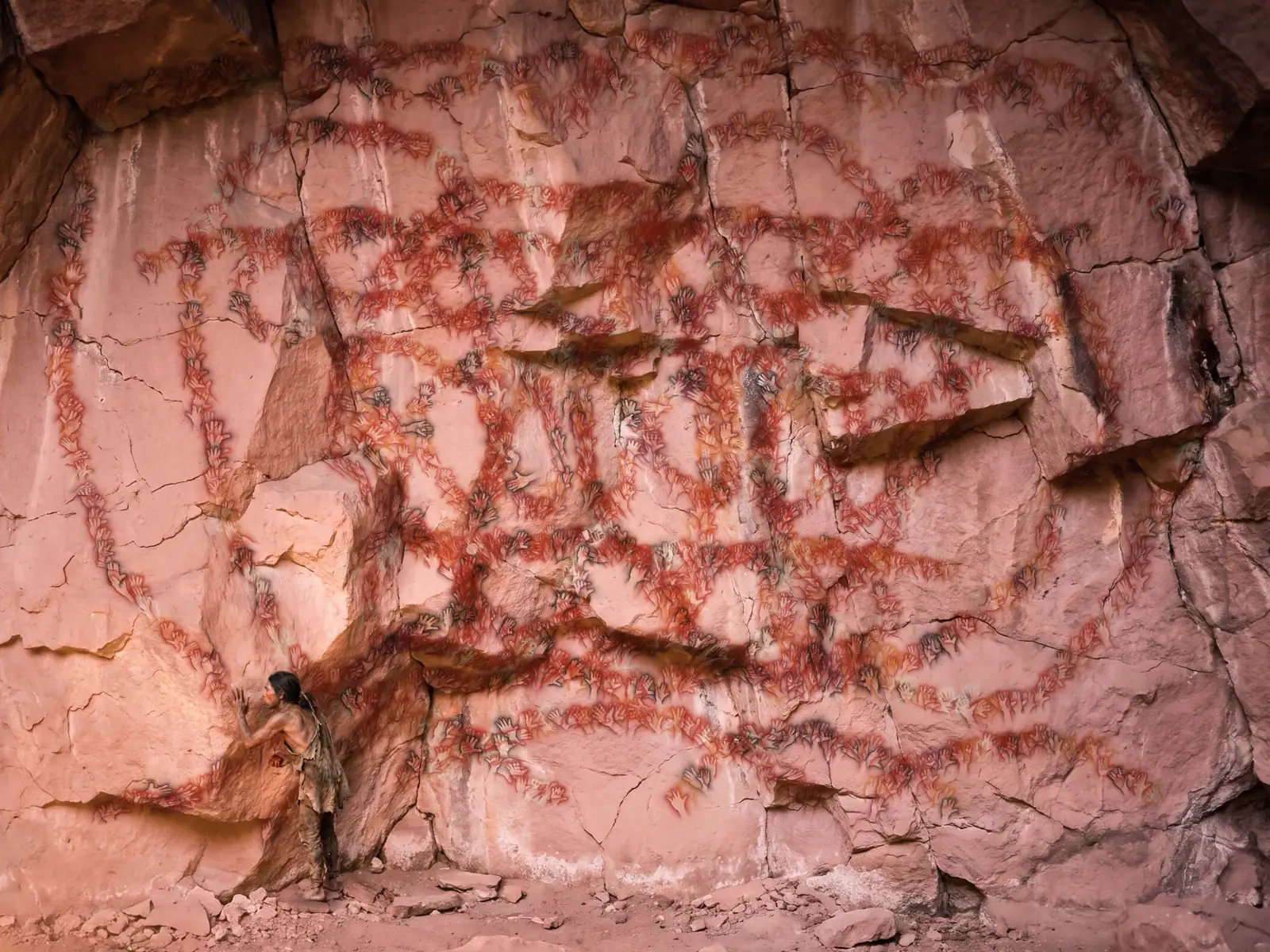
From handprints on cave walls to a banana taped to a gallery wall. Follow more than 67,000 years of art in twelve lessons. The goal is not to memorize the names of movements, but to understand the questions people in each era were asking when they made art.
Curated by Albert Kiwi
Background art · Albert Kiwi
Each lesson has one color that represents its era. Tap a color to go to that lesson.
The big arc of the twelve lessons
True to life, and more beautiful
From the bison of the caves to the storms of Romanticism, art’s long mission was to set the world, and God, before our eyes. What was depicted, and how convincingly and beautifully, mattered most.
From what we see to what we feel
When photography arrived, painters gave up exact copying and turned to light and emotion, and to color and form themselves. At the end of that road comes abstraction: paintings that depict nothing at all.
How each lesson works
- Historical backgroundWhat world did people of the time live in?
- Reading the worksThree or four key works, and what to look for
- Aesthetics noteOne philosophical question the era raised
- Connecting to Korean artKorean works in the same current
- Color of the eraThe story of a pigment that defines the era
- Quick quizThree questions to wrap up
Lessons
- Lesson 1 · c. 67,800 years ago – c. 3000 BCE The Beginnings of Art Cave paintings and prehistoric art Why did humans start making pictures?
- Lesson 2 · c. 3000 BCE – 5th century CE The Ancient World Egypt, Greece and Rome Is there a correct proportion for beauty?
- Lesson 3 · 4th – 14th century The Middle Ages Art for God How do you make an invisible God visible?
- Lesson 4 · 15th – 16th century The Renaissance Humanity and perspective Is a painting a window onto the world?
- Lesson 5 · 17th – mid-18th century Baroque and Rococo Light, darkness and drama Do paintings exist to move our hearts?
- Lesson 6 · Late 18th – mid-19th century Neoclassicism and Romanticism Reason and emotion Why does a terrifying storm feel beautiful?
- Lesson 7 · Mid-19th century – 1880s Realism and Impressionism Photography and the passing moment of light Why paint when there is photography?
- Lesson 8 · 1880s – 1900s Post-Impressionism The threshold of modern art Does how something is painted matter more than what is painted?
- Lesson 9 · 1905 – 1930s The Avant-Garde Fauvism, Cubism and abstraction Is a painting still a painting if you can’t recognize anything in it?
- Lesson 10 · 1916 – 1940s Dada and Surrealism What is art? Can a urinal be art?
- Lesson 11 · 1945 – 1970s Postwar Art Abstract Expressionism, Pop, Minimalism, Conceptual Art If only one of two identical-looking objects is art, what makes the difference?
- Lesson 12 · 1980s – today Contemporary Art An age when anything can be art Why does art today feel so hard to understand?